Learner
Accesses courses, materials, assessments and practices according to enrolment, and reviews progress.
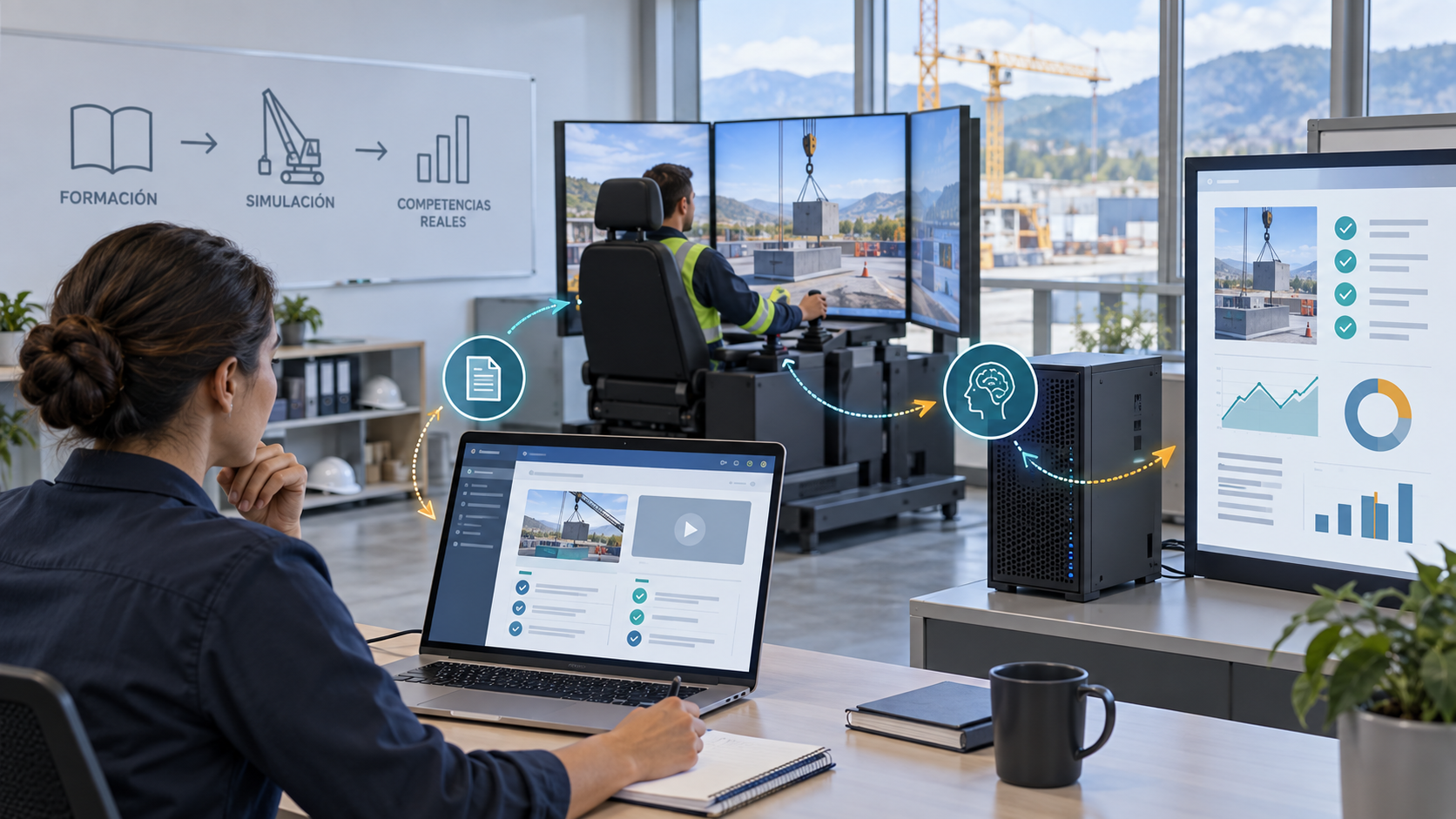
Connected technical training
LSyM's external LMS connects digital learning with real simulator activity. Courses, virtual classes, participants, exercises, results and assessments form one journey, with ILIAS as the academic environment and LSyM at the core of simulation.
Learn, practise, assess and improve in one continuous flow.
The solution is built on ILIAS 11.4, an open-source platform that can run on the organisation's own infrastructure. Each system keeps its responsibility and both communicate through authenticated services.
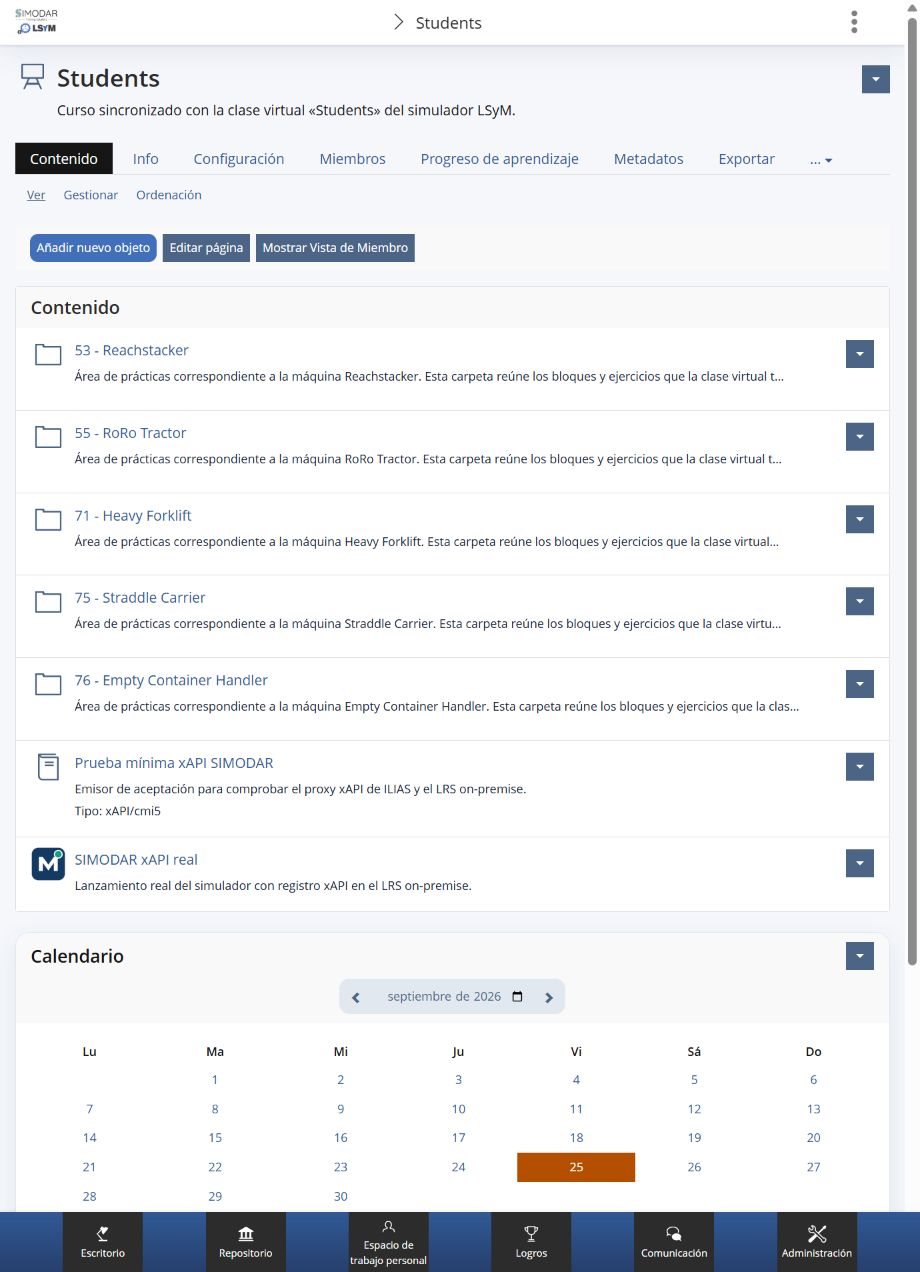
ILIAS courses and LSyM virtual classes retain a stable association, reconciling enrolments and participants without duplicating records.
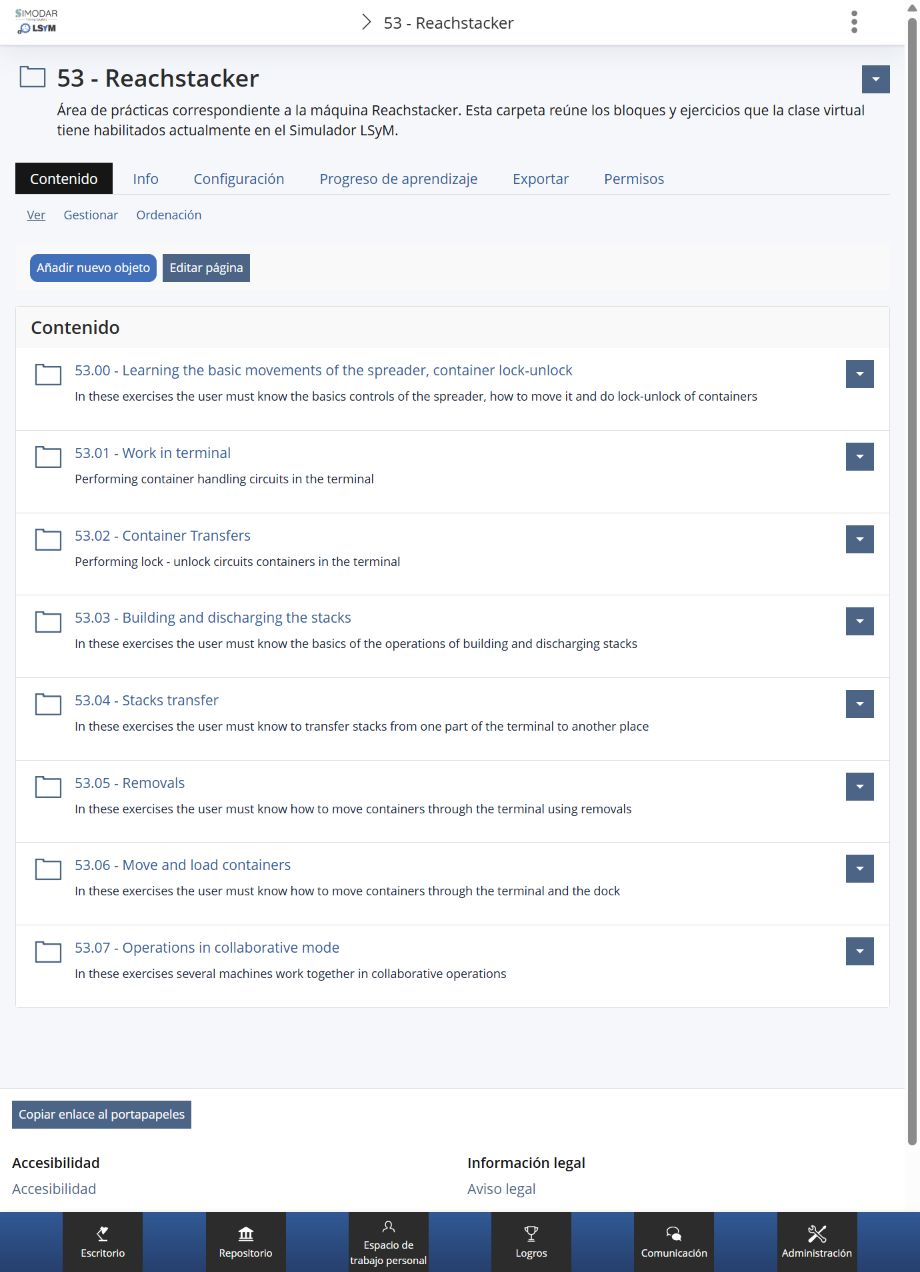
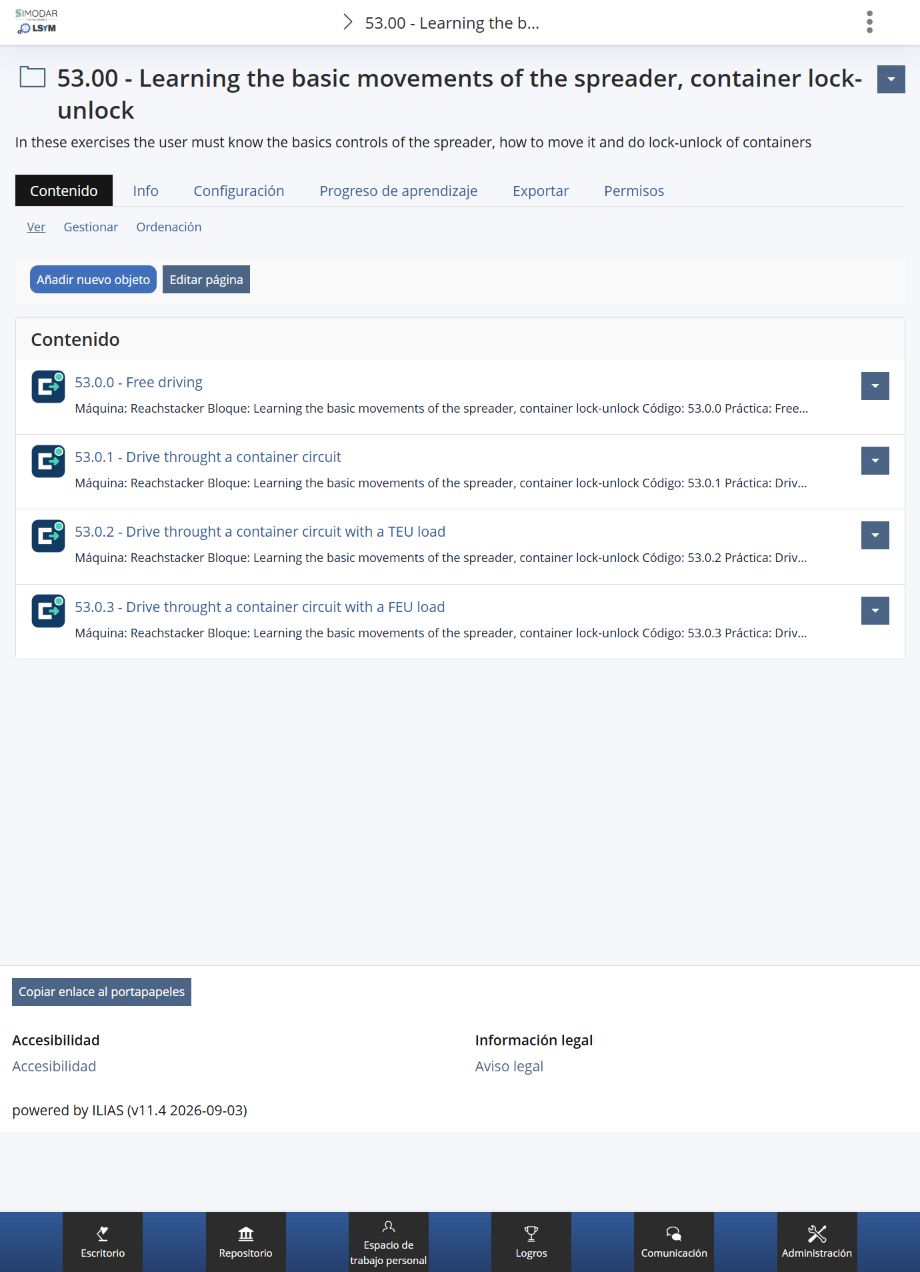
Machines, blocks and exercises appear inside the course; each user sees only the activities allowed by their role and enrolment.
Simulator telemetry, LMS progress and the instructor's rubric come together in a traceable record.
Operational synchronisation
The integration is not a one-off import. It can create and link the course for a virtual class, update enrolment and reorganise machines, blocks and practices when exercise selection changes.
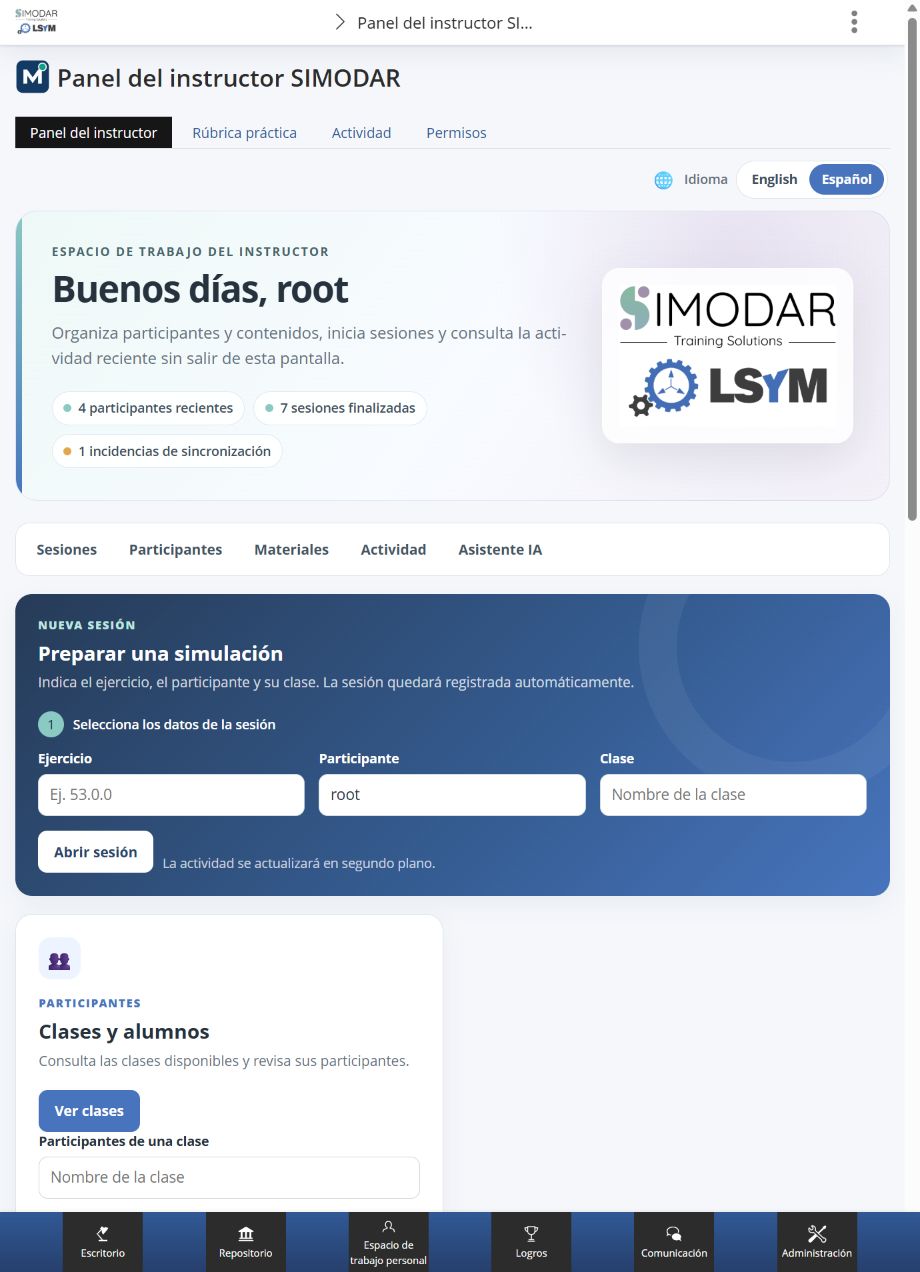
Workspace
The instructor sees the information needed to teach while synchronisation, retries and event delivery remain in the background.
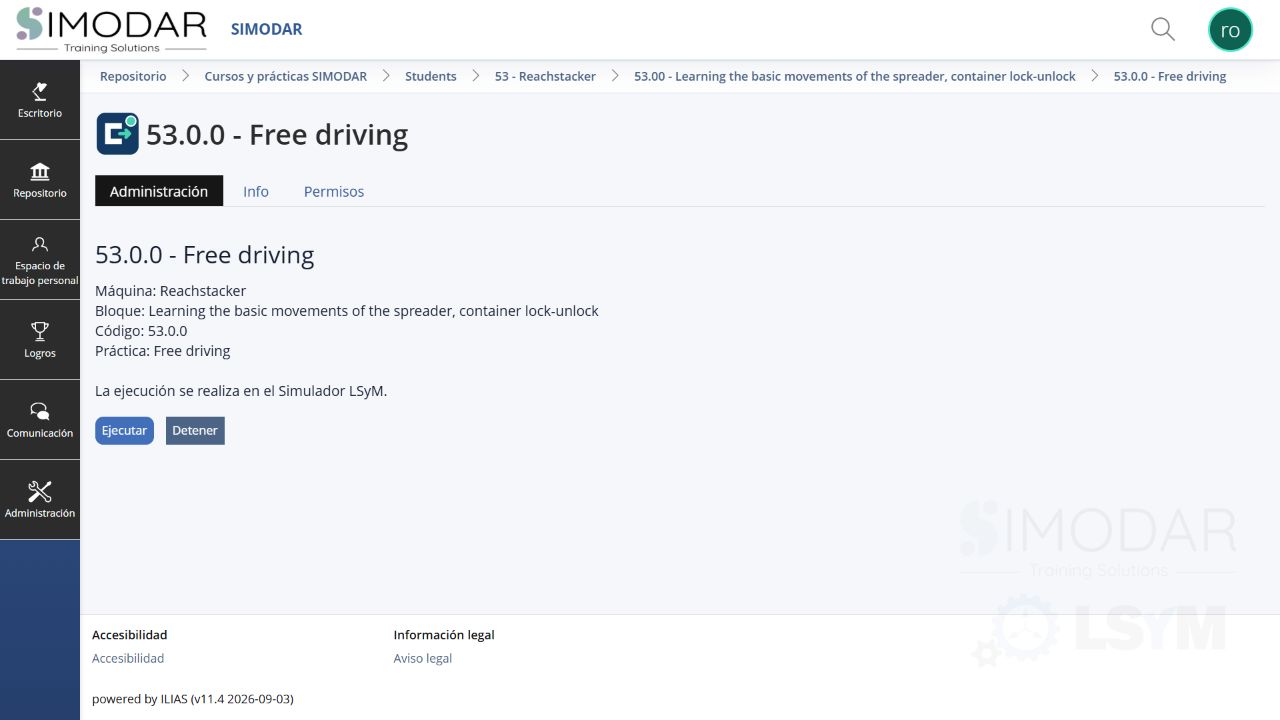
From campus to simulator
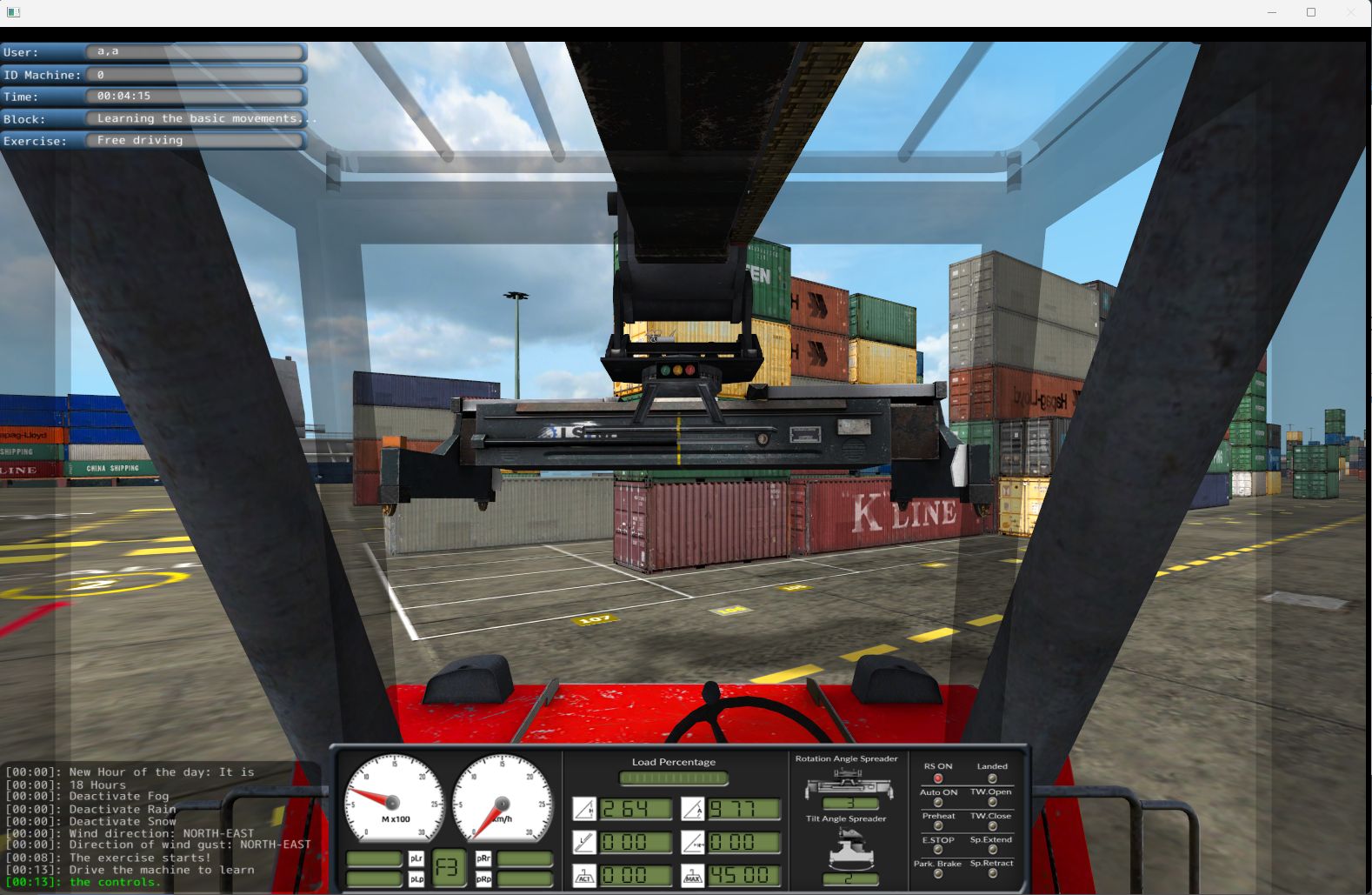
Before the activity begins, the session, enrolment and class membership are checked. LSyM receives the user, machine, block and exercise; the LMS retains the academic context.
Resilient tracking
Each launch and completion is prepared as an xAPI statement with a unique identifier. If the receiver is unavailable, the evidence remains in a persistent queue and is retried with progressive backoff.
Exhausted deliveries remain visible for review with their UUID, content and last error. Once the issue is resolved, an authorised instructor can requeue them without creating duplicates in the LRS.
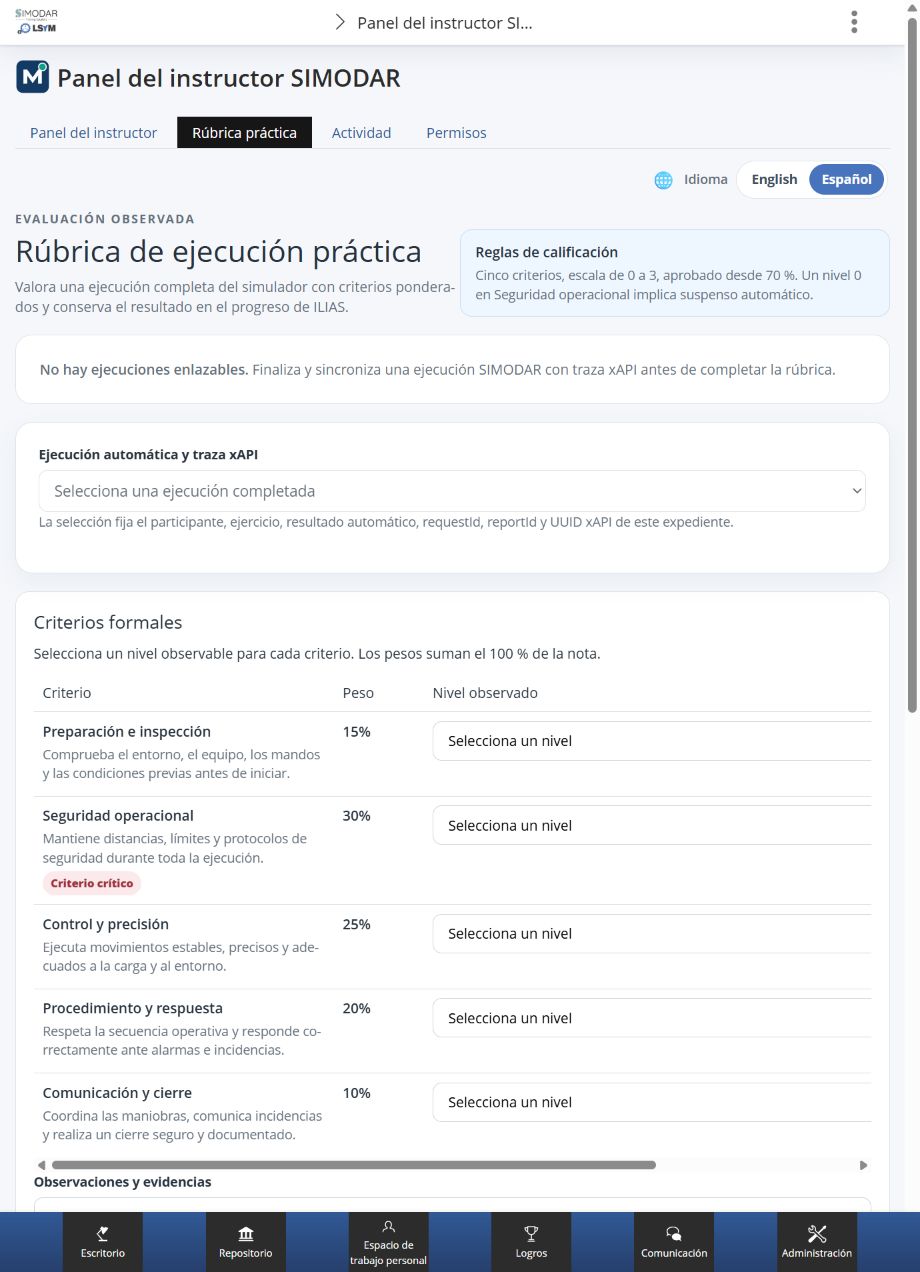
The rubric uses five weighted criteria on a 0–3 scale: preparation and inspection, operational safety, control and precision, procedure and response, and communication and closure. The pass mark is 70%, but level 0 in operational safety makes the practice non-compliant even when the weighted total reaches the threshold.
Interoperable content
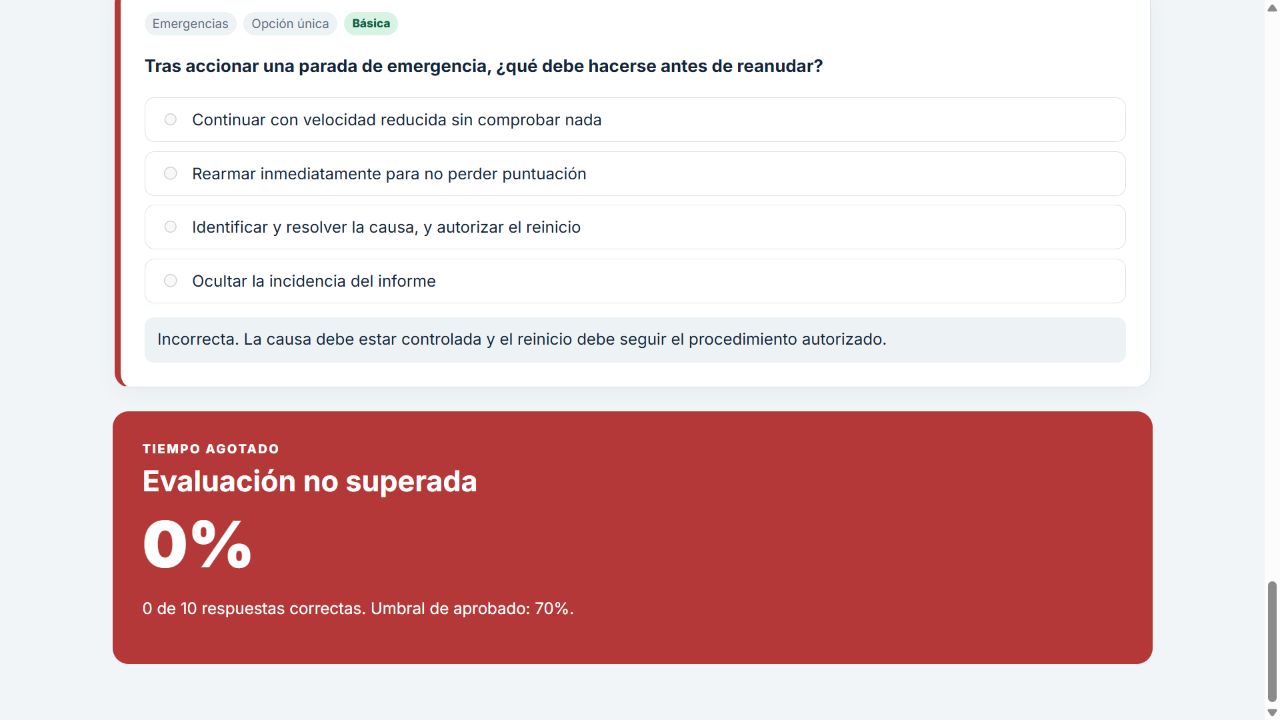
The SCORM 1.2 assessment includes 18 questions by category and difficulty, a random set of 10 per attempt, a 15-minute limit, a 70% pass threshold, resume support, score, status and interaction tracking.
Import, launch and tracking of this content have been checked in ILIAS.
An experience for every role
Accesses courses, materials, assessments and practices according to enrolment, and reviews progress.
Organises sessions, reviews results, completes rubrics and uses the AI assistant.
Supports the progress and incidents of assigned participants.
Reviews evidence and traceability without changing learning activity.
Configures roles and integrations and recovers incidents with restricted tools.
Demonstrated capabilities
The integration brings together functions tested with ILIAS 11.4 and LSyM simulators.
Learners understand what to do, instructors have evidence to guide them, and the organisation retains traceable information to improve training.